




Businesses constantly lump branding, marketing, and graphic design into one giant creative soup. When leaders sit down to discuss growth, the conversation often blends these disciplines together. Then come the classic requests: “Can you just make us a logo?” or “We need marketing,” or the universally dreaded, “Can you make it pop?”The problem? These are three completely different functions. Confusing them usually leads to inconsistent messaging, weak campaigns, and expensive rebrands down the road. When you hire someone to do "marketing" but what you actually lack is a brand identity, the results will fall flat.
Branding, marketing, and graphic design each play a unique role in your company's success. Understanding where one stops and another begins will save you time, money, and frustration. More importantly, the real magic happens when they all work together in perfect harmony.
Key Takeaways
- Branding is your company's core identity, reputation, and personality.
- Marketing is the megaphone that gets your brand in front of the right audience.
- Graphic design is the visual language that translates your strategy into recognizable assets.
- Missing even one of these elements will drastically reduce the effectiveness of your business strategy.

Branding: The Foundation of Everything
Branding is fundamentally who your company is. It acts as the anchor for every other business decision you make.
Many people mistakenly believe branding is just a logo, specific colors, nice fonts, and a catchy tagline. While those elements are important, they are only the surface level. True branding encompasses your personality, your voice, your positioning in the market, and your reputation. It is the feeling people associate with your business when they interact with you.
What Good Branding Answers
To build a solid foundation, your brand needs to answer a few crucial questions:
- What do we stand for?
- Why should people trust us?
- What makes us different from the competition?
- How do we want customers to feel when they think of us?
Think about how different businesses make you feel. A luxury brand feels polished and exclusive. A family-owned hardware store feels approachable and trustworthy. A bold tech startup feels disruptive and energetic. These feelings are meticulously crafted through branding.
Your logo isn’t your brand. It’s your brand’s profile picture.
Marketing: How People Discover You
If branding is the identity, marketing is the megaphone. Marketing is how you communicate your brand to the outside world. It gets your business in front of the right audience and convinces them to take action.
The Megaphone of Your Business
Marketing covers a wide array of activities and channels. This includes advertising, social media management, radio spots, SEO, email campaigns, video content, and paid ads.
The primary goals of marketing are to build awareness, generate leads, drive sales, and stay top-of-mind with your target audience. You want people to think of you the exact moment they need your product or service.
Strong Marketing Depends on Strong Branding
Without a clear brand, marketing becomes inconsistent and messy. Businesses end up sounding completely different on every platform. A customer might see a funny post on Facebook, but then read a stiff, corporate-sounding email the next day. This creates confusion, and confused customers rarely buy.
Running ads without branding is like handing strangers a business card with no name on it.
Graphic Design: The Visual Translation
Graphic design brings the brand to life visually. It is how people see your brand. A skilled designer translates your strategy and messaging into visuals that people recognize instantly.
Visual Elements That Matter
Graphic design includes the creation of logos, websites, social graphics, billboards, packaging, ads, brochures, videos, and comprehensive brand guides.
Good design does far more than look nice. It creates consistency across all your touchpoints. It builds professionalism, influences trust, and shapes perception. A well-designed website or brochure helps people remember your business long after they have clicked away or put the paper down.
Bad Design Creates Friction
Conversely, bad design creates massive friction for your audience. Inconsistent visuals make businesses feel disorganized. Outdated or sloppy design can hurt your credibility immediately, causing potential buyers to look for a more polished competitor.
People absolutely judge businesses by their graphics. Immediately. Ruthlessly.
The Simplest Way to Think About It
If you want a straightforward way to keep these three disciplines straight, look at their core purposes:
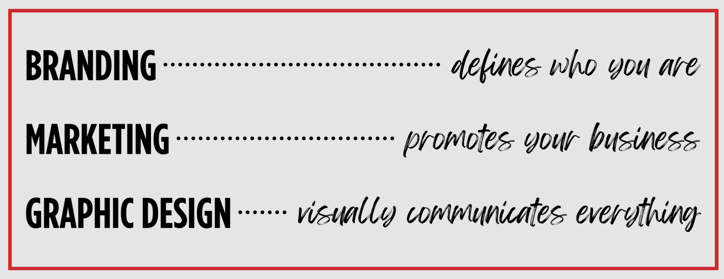
You can also think of it in terms of human interaction. Branding is the personality, marketing is the conversation, and graphic design is the appearance.
Alternatively, look at it chronologically. Branding is the strategy. Marketing is the execution. Design is the visual language.
What Happens When One Piece Is Missing
You might wonder if you really need all three. The reality is that skipping one element will cripple the other two.
Great Marketing with Weak Branding
You can spend thousands of dollars on advertising. The ads may even get attention. But without a strong brand, those ads will fail to build long-term loyalty. Your business will blend into the background quickly because there is no memorable personality for customers to connect with.
Great Branding with No Marketing
You might have a beautiful identity, a profound mission statement, and gorgeous colors. But if nobody ever sees it, it does not matter. Being the "best-kept secret" in your industry usually just means you are under-marketed.
Great Strategy with Poor Design
You might have brilliant messaging and a great product. However, if your visuals look cheap or confusing, that messaging loses credibility. Customers may question your professionalism before reading a single word of your carefully crafted copy.
A great logo won’t save bad marketing. And great marketing can’t fix an identity crisis.
Why Consistency Matters So Much
Customers notice disconnects incredibly fast. They might not be able to articulate why something feels off, but they will feel it.
Imagine visiting a beautifully polished website, only to click over to their social media and see pixelated, outdated graphics. Or picture a company with luxury branding pushing out low-quality, cheap-looking flyers. These disconnects erode trust.
Cohesion builds stronger businesses. Consistent visuals and messaging make your company easier to remember. Repetition creates familiarity, and familiarity builds trust. The strongest brands feel entirely intentional everywhere they exist—from the website and radio ads to social media, print materials, signage, and email campaigns.
Why Businesses Often Confuse These Roles
Small business owners often combine everything into one bucket labeled “marketing.” This is understandable, given the limited resources most growing companies face. However, it is a dangerous trap.
Businesses often hire one service provider or employee, expecting them to solve everything. They might say, “We just need a logo,” or “We just need social media.” They think boosting a few posts will fix their sales slump.
Usually, the deeper issue is strategy. Before you can market effectively, you need clear positioning, consistent messaging, better audience targeting, and a cohesive visual identity.
Bringing It All Together for Long-Term Success
Branding, marketing, and graphic design are not interchangeable, but they deeply depend on each other. Branding defines who your business is. Marketing gets people to notice you. Graphic design helps people recognize and remember you.
When all three align, your business stops looking random and starts looking intentional. Every touchpoint works together to build trust and drive sales.
Take a step back and evaluate your current efforts. Are your branding, marketing, and design actually working together, or are they pulling in different directions? At Zimmer Communications, we partner with businesses to create cohesive campaigns where strategy, messaging, and visuals all support the exact same goal. Reach out today to start building a strategy that actually works.

Frequently Asked Questions
Q: Can a graphic designer handle my marketing strategy?
A: Usually, no. While some professionals have overlapping skills, graphic designers specialize in visual communication. A marketing strategist focuses on audience targeting, budget allocation, and campaign execution. You need both functions, but they often require different experts.
Q: How often should I rebrand my business?
A: A true rebrand should be rare, perhaps every 7 to 10 years, or when your business undergoes a major fundamental shift. However, you can update or refresh your graphic design and marketing campaigns much more frequently to stay current with modern trends.
Q: Which should I focus on first: branding, marketing, or design?
A: Branding must come first. You need to define who you are, what you stand for, and your target audience before you can design visuals (graphic design) or launch campaigns to promote those visuals (marketing).