



Ever feel like you’re speaking a different language than your prospect? You present a powerful, 52-week branding campaign, and they ask for a two-week flight to promote a weekend sale. Or you provide a comprehensive plan, and they just want to know your cost-per-point. It’s a common frustration in radio sales, but what if the problem isn’t your presentation, but your approach?The truth is, every radio advertiser fits into one of four distinct categories. Understanding which type of buyer you’re talking to is the key to closing more deals, reducing frustration, and building stronger partnerships. By identifying their mindset and buying process, you can stop trying to fit a square peg in a round hole and start selling the way they want to buy.
This framework is built on two simple axes: an advertiser's time horizon (short-term vs. long-term) and their buying method (do they have one or not?). Once you learn to spot these traits, you'll see every prospect in a new light.
Key Takeaways
- Four Advertiser Types: All radio advertisers can be categorized based on their time horizon (short-term vs. long-term) and buying style (has a method vs. no method).
- Stop Fighting Their Nature: Don’t try to turn a short-term, promotional buyer into a long-term brand builder. Instead, meet them where they are.
- Method vs. No Method: Advertisers with a buying method need data that fits their system. Those without a method need your expert guidance and a clear plan.
- The Best Prospects: The most promising long-term prospects are often "Brand Builders"—stable businesses that aren't currently on the radio because they're looking for a trusted partner, not just a rate card.
The X-Axis: Short-Term vs. Long-Term Thinkers
First, let's look at how advertisers think about time. This is the horizontal axis of our framework and the most fundamental way to segment a prospect.
Short-Term Horizon Advertisers
These are the clients focused on now. They think in terms of this week, this month, or this quarter. Their goal is to drive immediate traffic for a specific event, sale, or promotion. They live and die by short-term results and rarely commit to long-term branding campaigns because their business model is built on creating urgency.
Trying to convert a short-term thinker into a brand advertiser is a losing battle. Even if you manage to sell them a 52-week schedule, they’ll inevitably revert to their promotional mindset, demanding to know if the ads "worked" after just a few weeks. It’s better to serve their needs with powerful, promotion-focused schedules.
Long-Term Horizon Advertisers
These are your best prospects for annual campaigns. They think in terms of years, not weeks. They look five years into the past to see how they've grown and five years into the future to plan where they're going. They understand that building a brand is a marathon, not a sprint.
How can you spot a long-term thinker?
- Ownership: Do they own their building or rent it? Owners are literally invested for the long haul.
- Longevity: How long have they been in business at their current location? Stability signals a long-term mindset.
- Language: Do they talk about their goals for "next year" or "in five years"?
- Contact: Are you speaking with the business owner or an employee? Owners tend to have a broader, more strategic view.
Interestingly, many of the best long-term prospects aren't currently advertising on the radio. They are waiting for a true partner to help them build their brand.
The Y-Axis: Has a Method vs. No Method
Next, let’s examine how advertisers make decisions. This vertical axis is about their buying process.
Advertisers Who Have a Method
These buyers use a specific system to evaluate media proposals. Their method might seem logical or completely arbitrary, but it’s their system, and they trust it. Common methods include:
- Cost-per-Point (CPP) or Cost-per-Thousand (CPM): They make decisions based on efficiency metrics.
- Qualitative Data: They prioritize things like listener loyalty or specific programming environments.
- Demographic Dominance: They want to see rankers showing your station is #1 with their target demo.
Here's the crucial rule: You cannot change their method. Trying to argue against their system will only damage your credibility. Your job is to give them what they need—the data and proposal formatted in a way that fits their evaluation process.
Advertisers With No Method
These advertisers lack a formal system for buying media. They often feel overwhelmed by the process and are looking for an expert they can trust. There's a huge opportunity here, as the U.S. has over 31.7 million small businesses, and many of them fall into this category.
What these buyers want is guidance. They need a partner who can provide:
- Clarity: A simple, easy-to-understand plan.
- Confidence: The assurance that you are the expert who will steer them correctly.
- Consistency: A steady hand to guide their long-term strategy.
The detailed, data-heavy presentation that a "method buyer" requires will only confuse and frustrate this type of advertiser. They need you to be their method.
The Four Advertiser Quadrants
When you combine the two axes, you get four distinct types of advertisers.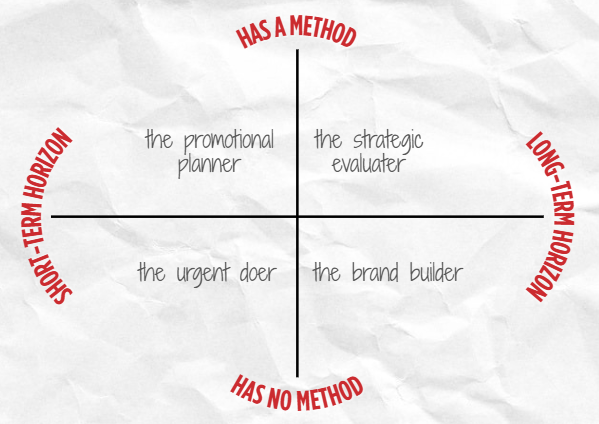
1. The Promotional Planner (Short-Term + Has a Method)
These are often ad agencies or experienced direct clients who plan their promotions with precision. They are easy to find because they usually call you asking for rates and rankers. They want CPP/CPM data and are looking for the most efficient way to drive short-term results.
How to Sell Them: Give them the data they ask for and offer well-structured promotional schedules that align with their metrics.
2. The Urgent Doer (Short-Term + No Method)
This advertiser needs results now but has no idea how to get them. They are often reactive, calling you because a competitor is on the air or business is slow. They need your guidance to create a clear, promotion-based plan that delivers immediate impact.
How to Sell Them: Be their expert. Offer simple, powerful promotional plans and help them avoid impulsive, ineffective decisions.
3. The Strategic Evaluator (Long-Term + Has a Method)
These are established businesses that value consistency and long-term growth but still rely on a specific buying method. They may be open to a 52-week schedule, but they will judge your proposal based on their internal metrics.
How to Sell Them: Propose a long-term branding schedule and provide all the data they need to justify the investment according to their system.
4. The Brand Builder (Long-Term + No Method)
This is your ideal 52-week prospect. They are stable, future-focused business owners who know they need to build their brand but don’t know how. They aren't looking for a deal; they're looking for a trusted marketing partner.
How to Sell Them: Guide them confidently. Present a clear, long-term branding strategy and position yourself as the expert who will help them achieve their five-year goals.
Make This Framework Work for You
This framework isn't just a theory; it's a practical tool for your daily prospecting. In your first meeting with a potential client, ask questions that reveal their time horizon and buying method. Listen to their language, understand their goals, and identify which quadrant they fall into.
By doing so, you can:
- Avoid Wasted Time: Stop presenting branding to promotional buyers.
- Build Credibility: Align your presentation with their natural buying behavior.
- Prospect Smarter: Look for "Brand Builders" outside your competitor’s client list.
Stop selling the way you like to sell and start selling the way they need to buy. When you match your approach to the advertiser’s type, you’ll not only close more deals but also build more rewarding, long-lasting partnerships.
Frequently Asked Questions
Q: What if I misidentify an advertiser's type?
A: It happens! The key is to listen and be flexible. If you pitch a long-term plan and they keep asking about immediate results, they are likely a short-term thinker. Pivot your approach to better match their needs. The goal is to serve the client, not force them into a box.
Q: Can an advertiser change types over time?
A: Yes, but it's rare. An "Urgent Doer" might grow into a "Brand Builder" as their company stabilizes and they gain more confidence in marketing. Similarly, a company might hire a marketing director who implements a formal buying method, turning them into a "Strategic Evaluator." However, you should always sell to who they are today.
Q: How can I quickly identify their type during a cold call or first meeting?
A: Ask targeted questions. For time horizon, ask: "What are your biggest business goals for the next 90 days? What about the next three years?" For their method, ask: "How have you made advertising decisions in the past? What information is most important for you when evaluating a proposal?" Their answers will reveal their quadrant.