


Most business owners know they need marketing. What trips them up is the connection between marketing and actual revenue. You might run ads, refresh your website, or post consistently on social media—and still scratch your head when sales stay flat.Here's the truth: marketing rarely fails because of one bad ad. It fails because something in the customer journey is broken, and the broken piece is hard to spot from the inside.
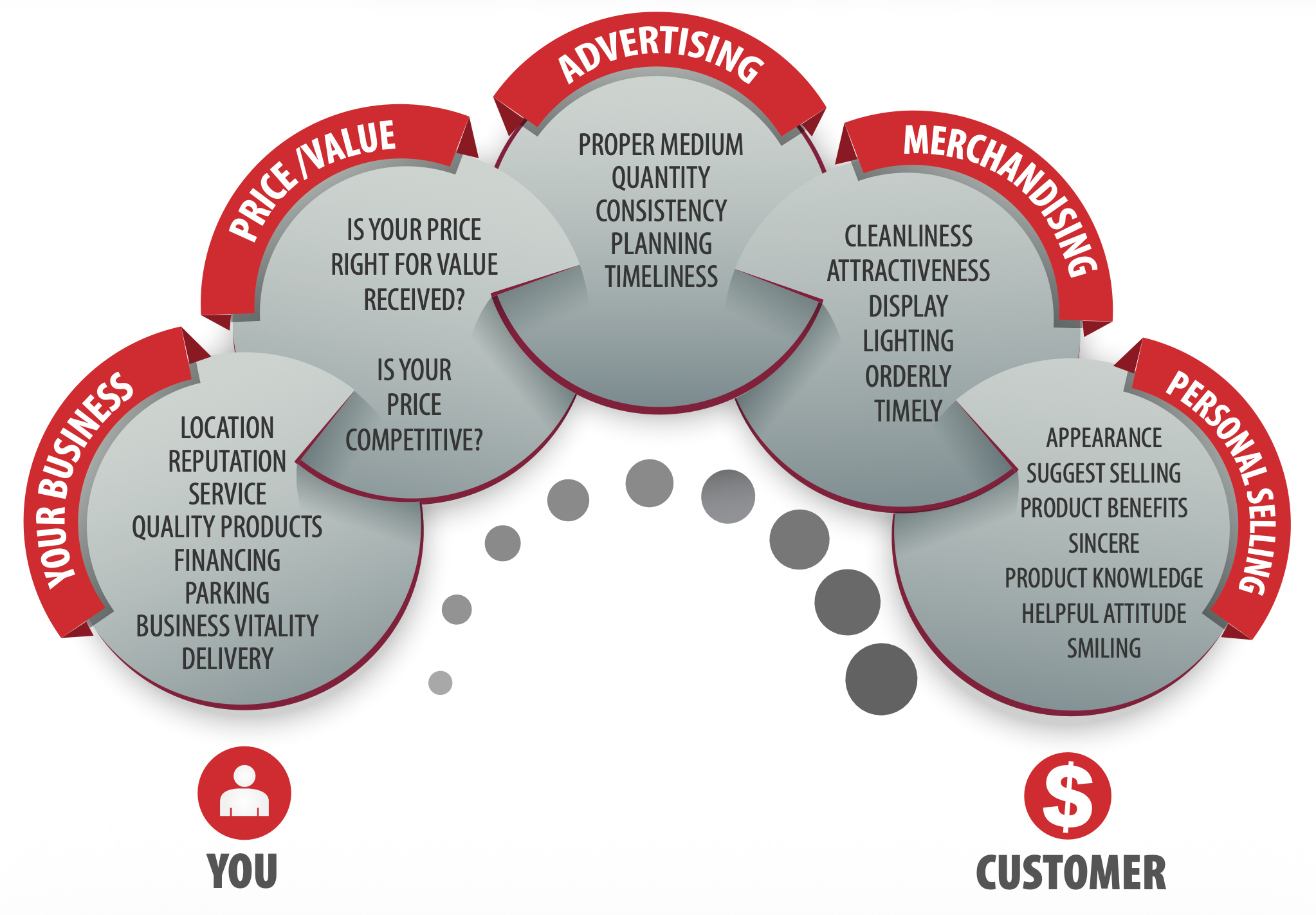
That's where the Marketing Bridge comes in. It's a simple way to picture the path from your business to your customer. Your business sits on one side. Your customer stands on the other. The bridge is everything that helps them cross the gap and become a buyer. When every section of that bridge is strong, customers move smoothly from "never heard of you" to "take my money." When one section is weak, they fall through—and you're left wondering why your marketing isn't working.
This blog breaks down each part of the Marketing Bridge so you can find your weak spots, fix them, and finally connect your marketing efforts to real growth.
Key Takeaways
- The Marketing Bridge connects your business to your customer, with each section representing a step in the buying journey.
- Every section must be strong. One weak piece can stop customers from ever reaching a purchase.
- The main sections include your business foundation, price and value, advertising, merchandising, and personal selling.
- Advertising creates awareness, but it can't fix a poor product, a bad experience, or weak sales skills.
- Sustainable growth comes from strengthening the whole bridge—not from chasing one tactic at a time.
What Is the Marketing Bridge?
The Marketing Bridge is a visual model that connects your business to your customers. It identifies the key elements that build trust and encourage people to take action.
Customers don't automatically buy just because you offer a good product or service. Several factors influence whether they move from awareness to purchase—and most of those factors have nothing to do with luck.
Think of it this way: your business is on one side, your customer is on the other, and the bridge is everything in between that helps them cross. Each plank matters. Miss one, and the journey gets shaky.
The Foundation: Your Business
Everything starts with your business. Before marketing can do its job, the fundamentals have to be solid.
Ask yourself a few honest questions:

- Is your reputation strong?
- Are you delivering quality products or services?
- Is your customer service consistent?
- Are your operations reliable?
The foundation of the bridge includes things like your location, reputation, service, product quality, financing options, parking and accessibility, overall business vitality, and delivery or convenience.
Here's why this matters so much: marketing can get people in the door, but it can't fix a poor customer experience. If the experience disappoints, no amount of clever advertising will save you.
Advertising can create interest. Only your business can create loyalty.
Price and Value: Are Customers Getting What They Expect?
Customers don't always choose the cheapest option. Most buyers are looking for value—not necessarily the lowest price.
When people clearly understand what makes your business worth the investment, price stops being a dealbreaker. They'll happily pay more when they trust they're getting more.
A few questions worth asking:
- Is your pricing competitive?
- Do customers clearly understand your value?
- What makes your business different from your competitors?
The most common mistake here is competing only on price instead of communicating value. It's a race to the bottom, and there's always someone willing to go cheaper. Show people why you're worth it, and price becomes a much smaller hurdle.

Advertising: The Center of the Bridge
Advertising sits right in the middle of the bridge, and for good reason. This is where awareness happens. Advertising introduces your business to potential customers and keeps you top-of-mind for the moment they're ready to buy.
Effective advertising relies on a handful of factors:
- The proper medium
- Quantity
- Consistency
- Planning
- Timeliness
Consistency deserves special attention. Customers rarely respond after seeing or hearing a single ad. Repetition builds familiarity, familiarity builds trust, and trust is what eventually drives a purchase.
This is also where strategy beats guesswork. Radio, digital, streaming, and social channels all perform best when they're planned with intention—not thrown together at random. A scattered approach wastes money. A coordinated one compounds results.
The best ad in the world can't work if nobody sees it enough.
Merchandising: What Customers Experience When They Arrive
Marketing doesn't stop the moment someone walks through your door—or lands on your website. Whether you run a retail shop, a restaurant, a medical office, or a service business, presentation matters.
The merchandising section of the bridge includes:
- Cleanliness
- Attractiveness
- Displays
- Lighting
- Orderliness
- Timeliness
First impressions still carry enormous weight. Customers often form opinions within seconds, and a poor experience can quietly undo everything your advertising worked to build.
For service businesses, merchandising looks a little different. It can include your website appearance, office environment, vehicle branding, online reviews, and even the quality of your customer communications. Every one of these touchpoints tells people what to expect.
Personal Selling: The Final Step Before the Sale
People still buy from people. Even with all our digital tools, human interaction often decides whether a prospect turns into a customer.
The personal selling section of the bridge includes:
- Appearance
- Suggestive selling
- Product benefits
- Sincerity
- Product knowledge
- A helpful attitude
- Smiling
Customers want confidence before they commit. A knowledgeable, friendly team can dramatically improve your conversion rates—often more than any single campaign.
This stage shows up everywhere: a receptionist answering the phone, a sales associate greeting a walk-in, a technician explaining a repair, or a consultant answering questions. Each of these moments is a chance to build trust or break it.
Your employees are part of your marketing strategy whether you realize it or not.
Where Many Businesses Break the Bridge
Most struggling businesses don't have a complete failure on their hands. They have one weak section that sabotages the rest. The trouble is, owners tend to focus on a single part and ignore the others.
A few familiar patterns:
- Great advertising but poor customer service.
- Excellent products but little marketing.
- Strong branding but weak sales training.
- Competitive pricing but an outdated customer experience.
The result is always the same. Customers start crossing the bridge, hit the broken plank, and never make it to a purchase. Then marketing gets blamed—when the real problem lives somewhere else entirely.
Why the Entire Bridge Must Work Together
Marketing isn't a single tactic. Advertising alone won't drive sustainable growth, no matter how big the budget.
Real success comes from strengthening every connection between your business and your customer. The strongest businesses tend to do five things well:
- They deliver exceptional customer experiences.
- They communicate their value clearly.
- They invest in consistent advertising.
- They create positive customer interactions at every touchpoint.
- They build trust at every stage of the journey.
When these pieces work in harmony, the bridge holds. Customers cross with confidence, and marketing finally does what it's supposed to do—generate sales, not just attention.
Build a Bridge That Carries Customers All the Way Across
The Marketing Bridge is a reminder that sales don't happen because of one ad, one social post, or one promotion. They happen when every part of the customer journey works together.
When your business foundation, pricing, advertising, customer experience, and sales efforts all align, customers can move confidently from awareness to purchase. Take a moment to walk your own bridge, section by section, and look for the plank that's holding you back. Fixing that one spot might be the difference between marketing that fizzles and marketing that pays.
At Zimmer Communications, we help businesses strengthen every section of the Marketing Bridge—from strategic advertising and branding to audience targeting and campaign planning—so your marketing doesn't just generate attention, it generates results.

Frequently Asked Questions
Q: What is the Marketing Bridge?
A: The Marketing Bridge is a visual model that shows the journey from your business to your customer. It maps out the key elements—your business foundation, price and value, advertising, merchandising, and personal selling—that build trust and move people from awareness to purchase. Each section must be strong for customers to cross successfully.
Q: Why isn't my advertising leading to more sales?
A: Advertising creates awareness, but it can't fix problems elsewhere in the customer journey. If your product quality, customer service, in-person experience, or sales team is weak, customers may start crossing the bridge and never reach a purchase. Often the real issue isn't the advertising itself—it's a different section of the bridge that needs attention.
Q: How do I know which part of my Marketing Bridge is weak?
A: Walk through each section honestly. Review your reputation and operations, check whether customers understand your value, evaluate the consistency of your advertising, assess the experience people have when they arrive, and consider how well your team handles personal interactions. The weak spot is usually where customers show interest but don't convert.