
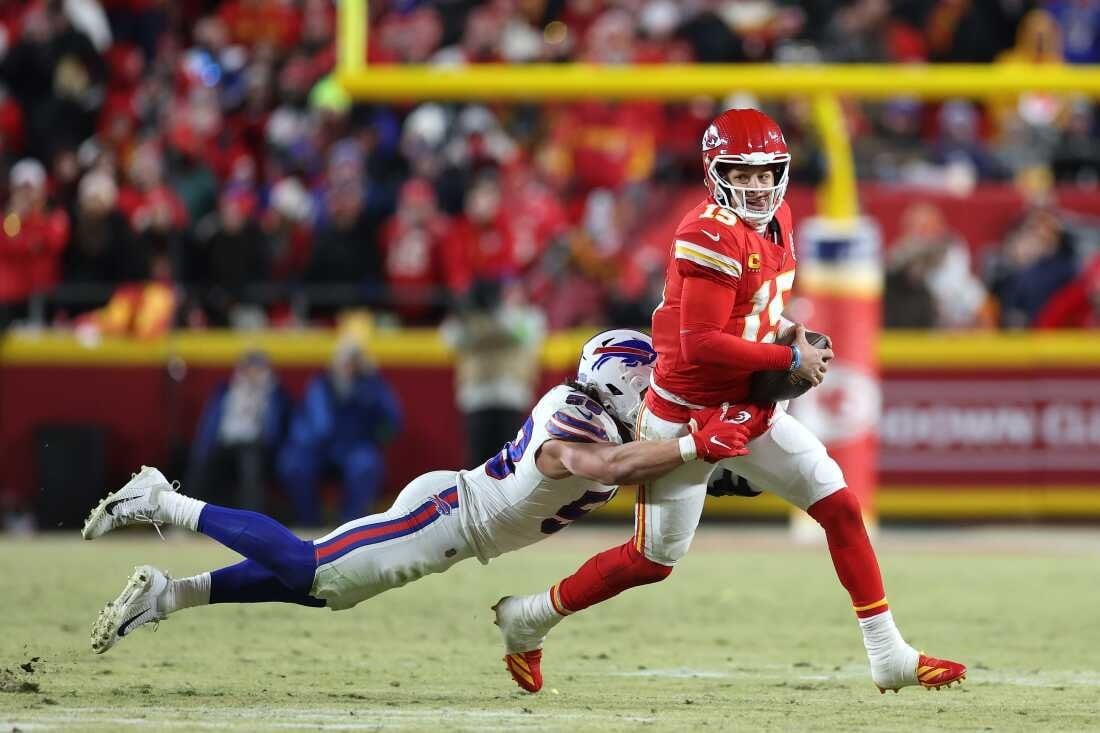


Every fall, something shifts in Mid-Missouri. The Chiefs take the field, and the region tunes in—on the radio, in the car, at home, at the grill. AM/FM radio has been a trusted companion for Chiefs fans for decades, and new listening data from KCMQ confirms what local businesses have long suspected: when football season kicks off, radio audiences don't just grow—they stay tuned longer.
For advertisers, that's a big deal. More listeners. Longer sessions. A highly engaged, loyal audience gathered around one shared event, week after week, from September through January.
Key Takeaways
- Chiefs season drives a 15.28% increase in total radio listening on Sundays (Noon–11 p.m., Adults 12+), per KCMQ data
- Time Spent Listening jumps 10.53% overall during the season—and a striking 30% among men 25–64
- Nearly 20% of NFL radio listening happens at home, not in the car (Nielsen)
- Consistent, season-long advertising outperforms one-game sponsorships every time
The Chiefs Effect Is Real
What KCMQ Data Shows About Football Season Listening
The numbers from 96.7 KCMQ are clear. During Chiefs season—specifically Sundays between Noon and 11 p.m.—total listening among Adults 12+ increases by 15.28% compared to the offseason. Time Spent Listening (TSL) climbs 10.53% in the same window.
Among Men 25–64, the results are even more pronounced. Total listening rises 12.5%, and Time Spent Listening jumps an impressive 30%. That's nearly a third more time this key demographic spends with radio on game day.
So what does that actually mean? More people are tuning in, and the people who tune in are staying longer. That combination—greater reach and deeper engagement—is exactly what advertisers are looking for. Football season doesn't just expand the audience. It locks them in.
NFL Radio Listening Follows Fans Everywhere
Where Are Chiefs Fans Actually Listening?
Most people still picture radio listening as a commute thing—someone stuck on the highway during drive time. NFL listening tells a different story.
According to a Nielsen analysis reported by Inside Radio, nearly 20% of NFL radio listening occurs in the home. Fans tune in while watching the game on TV, grilling in the backyard, doing yardwork, tailgating, running errands, and traveling. The audience is everywhere—not just in the car.
There's another dynamic worth noting. A growing number of fans sync their local radio broadcast with the TV broadcast on purpose. Why? Loyalty to local announcers. Many fans prefer the color, familiarity, and community feel of a hometown broadcast over generic national commentary. Some have cut cable entirely and rely on radio as their primary game-day audio source.
The result: radio coverage of Chiefs games—pregame analysis, live play-by-play, halftime discussion, postgame breakdowns—reaches fans across multiple settings and activities throughout the entire Sunday window.
Why Sports Radio Creates Such an Engaged Audience
Sports programming is one of the few types of media people actively seek out every single week. Fans don't stumble across a Chiefs game by accident. They plan for it. They set aside Sunday afternoon. They tune in for the pregame show, stay through kickoff, follow the live coverage, and listen to the postgame wrap.
That level of intentional engagement is rare. Social media gets scrolled past. Podcasts play in the background. Sports radio gets focused attention—because the content matters to the listener in real time.
NFL radio listeners are also emotionally invested in what they're hearing. They're not channel surfing. They're not half-watching. They're locked in, which means the content around that broadcast—including commercials—gets real attention.
NFL audio listeners are significantly more sports-engaged than their TV-watching counterparts. Across eleven different measures of sports passion, postseason NFL radio audiences score 46% higher than postseason TV viewers (MRI-Simmons). These are not passive fans.
More Time Listening = More Advertising Opportunities
How Does Increased Time Spent Listening Benefit Advertisers?
Frequency is a foundational principle of advertising. The more often someone hears your message, the more likely they are to remember your business when they need what you sell.
When Time Spent Listening rises—especially by 30% among Men 25–64, as KCMQ data shows during Chiefs season—advertisers get more exposures per listener. That means more commercial impressions, better message retention, and stronger brand recall over the course of a 17-week regular season.
Consistent repetition builds familiarity. Familiarity builds trust. Trust drives purchase decisions. It's not complicated, but it does require showing up week after week—not just once.
NFL Radio Listeners Are Valuable Consumers
The size of the audience is compelling. The profile of that audience makes it even more attractive for advertisers.
According to a Westwood One NFL Listening Study, NFL AM/FM radio listeners are:
- 25% more likely to have a household income of $75,000 or more (compared to the total U.S. profile)
- 28% more likely to have children at home under 18
- 11% more likely to work full-time
- More likely to be active household decision-makers for major purchases
These are not passive consumers. They're buying vehicles, hiring contractors, choosing restaurants, selecting healthcare providers, and managing household finances. The study noted that NFL postseason AM/FM listeners are far more likely to be in the market for a new vehicle, major appliance, or financial services compared to postseason TV viewers.
For Mid-Missouri businesses in automotive, home services, healthcare, financial services, retail, and restaurants, that's a ready audience.
Why Consistency Across the Season Matters
It's a common question from businesses exploring sports radio advertising. Opening weekend feels exciting. A rivalry game or playoff run seems like a smart one-time buy.
But consistency is what actually builds results.
Think of it this way: advertising during a single game is like introducing yourself once at a networking event and expecting everyone to remember you six months later. It rarely works. Repetition is what creates recognition, and recognition is what drives action.
The Westwood One data reinforces this. NFL radio audiences expand throughout the season. In Week 1, approximately 8 million unique consumers tune in nationally. By the end of September, that number grows to 21 million. The full regular season reaches 53.5 million different U.S. listeners—with an additional 10 million tuning in during the playoffs.
Locally, that growth pattern holds. Businesses that commit to the full season get more reach as the audience builds, more frequency as the weeks stack up, and stronger brand association with football Sundays in their community.
What Does This Means for Mid-Missouri Businesses?
Chiefs season creates a concentrated, recurring advertising opportunity unlike almost anything else in the local market. The programming is consistent. The audience is loyal. The engagement is high. And it runs every Sunday for months.
Industries with the most to gain include:
- Automotive – high-income, employed listeners actively making vehicle decisions
- Restaurants and bars – fans planning game-day meals and outings
- Home services – household decision-makers with children at home
- Healthcare – reaching adults in the key 25–64 demographic
- Financial services – listeners with above-average household income
- Retail and sporting goods – seasonal buyers throughout fall
- Events and entertainment – reaching a community-oriented audience
That said, businesses outside these categories shouldn't count themselves out. Football draws broad community audiences—casual fans, households with kids, people who simply love the local energy around a winning team. The Chiefs brand reaches well beyond die-hard football fans, and radio captures all of them.
The Biggest Winners Show Up All Season Long
The data points in one direction. Chiefs football drives meaningful, measurable increases in radio listening across Mid-Missouri—more listeners, longer sessions, and a more engaged audience than almost any other programming can deliver. Nationally, NFL on AM/FM radio reaches 64 million people annually, with audiences that are more passionate, more employed, and more purchase-ready than NFL TV viewers.
The businesses that benefit most aren't the ones that bet on one big game. They're the ones that show up consistently, build familiarity week after week, and earn a place in the listener's mind by the time the playoffs arrive.
Planning your fall marketing strategy? Zimmer Communications can help you build a campaign around Chiefs football broadcasts and extend your reach through radio, digital, streaming, and social media. Reach fans wherever they're listening—and keep your brand top of mind all season long.

Frequently Asked Questions
Q: How much does radio listening actually increase during Chiefs season in Mid-Missouri?
A: KCMQ data shows total listening on Sundays (Noon–11 p.m., Adults 12+) increases by 15.28% during Chiefs season compared to the offseason. Time Spent Listening rises 10.53% overall, and jumps 30% among Men 25–64—a particularly valuable demographic for most local advertisers.
Q: Why should Mid-Missouri businesses advertise on radio during the entire Chiefs season instead of just key games?
A: Advertising effectiveness is built on repetition. NFL radio audiences grow throughout the season—nationally, the unique listener base expands from roughly 8 million in Week 1 to 21 million by the end of September. Businesses that commit to a full-season presence accumulate more impressions, stronger brand recognition, and greater recall by the time the audience is at its largest.
Q: Are NFL radio listeners a good advertising audience for local businesses?
A: Yes. NFL AM/FM radio listeners are 25% more likely to have a household income of $75,000 or more and 28% more likely to have children at home compared to the average U.S. consumer. They're active household decision-makers—the exact consumers local businesses in automotive, home services, healthcare, and retail want to reach.